Innovative Web Network 277452032 Digital Engine
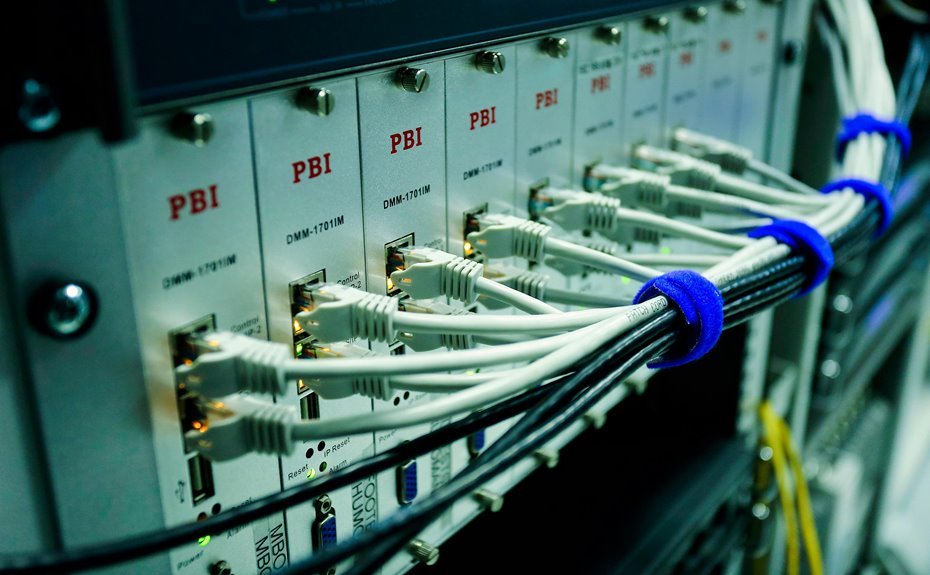
The Innovative Web Network 277452032 Digital Engine presents a modular, data-flow centered approach to web performance, emphasizing deterministic rendering and predictive queuing. It claims resilience through edge-inflection and cryptographic isolation, aiming for secure, scalable connections and rapid recovery. Critics will assess its measurable impacts on latency, cacheability, and throughput, alongside transparency in benchmarking. The framework promises interoperability and long-term maintainability, but its practical viability and governance require careful scrutiny as architecture decisions unfold. Decisions here warrant further scrutiny.
What Problems the Engine Solves for Modern Web
The engine addresses the core inefficiencies of contemporary web architectures by streamlining data retrieval, rendering pipelines, and network utilization. It reframes latency, composability, and caching as explicit design goals, enabling targeted problem solving and measurable efficiency gains.
How the Engine Delivers: Core Architecture and Capabilities
The engine’s core architecture orchestrates modular data flows and deterministic rendering timelines to optimize latency, cacheability, and network utilization. It demonstrates a scalable, componentized design that emphasizes adaptability over rigidity. Dynamic latency is managed through predictive queuing and edge-inflection. A resilient topology ensures fault tolerance, rapid recovery, and continuous operation, supporting ambitious, freedom-loving architectures and open-ended experimentation.
Measurable Impacts: Performance, Security, and Scalability in Action
Early measurements reveal how performance, security, and scalability interlock to shape operational reality: throughput under load and deterministic render timelines hinge on predictive queuing, edge-inflection, and resilient routing, while cryptographic handshakes and isolation domains curb attack surfaces without throttling latency.
Measured results highlight scaling costs and latency guarantees, exposing tradeoffs, guiding future architectures toward disciplined, freedom-friendly resilience and transparent, actionable benchmarking.
How to Choose the Right Fit: Use Cases and Evaluation Frameworks
Is there a framework that reliably maps use cases to architectural strengths without locking teams into rigid vendor ecosystems? The analysis favors modular frameworks that align use-case spectra with evaluation metrics, emphasizing interoperability and open standards. It critiques rigidity, champions adaptability, and presents a disciplined approach to selection. Discussion ideas emerge; evaluation metrics quantify flexibility, performance, and long-term maintainability for freedom-seeking teams.
Conclusion
The Engine presents a technically lucid blueprint for modern web flux, aligning modular data flows with deterministic timelines to shrink latency and bolster resilience. Its architecture favors cryptographic isolation and edge-inflection for secure, scalable connections, while transparent benchmarking anchors accountability. Yet, as adoption widens, interoperability hurdles and evolving threat models demand proactive governance. By metaphorically docking in a 1999-server room, the system gains nostalgic discipline even as it propels toward an open, future-oriented, standards-driven trajectory.